Travelling At Night Crafting system
Where the skin of the world thins enough to remake tools
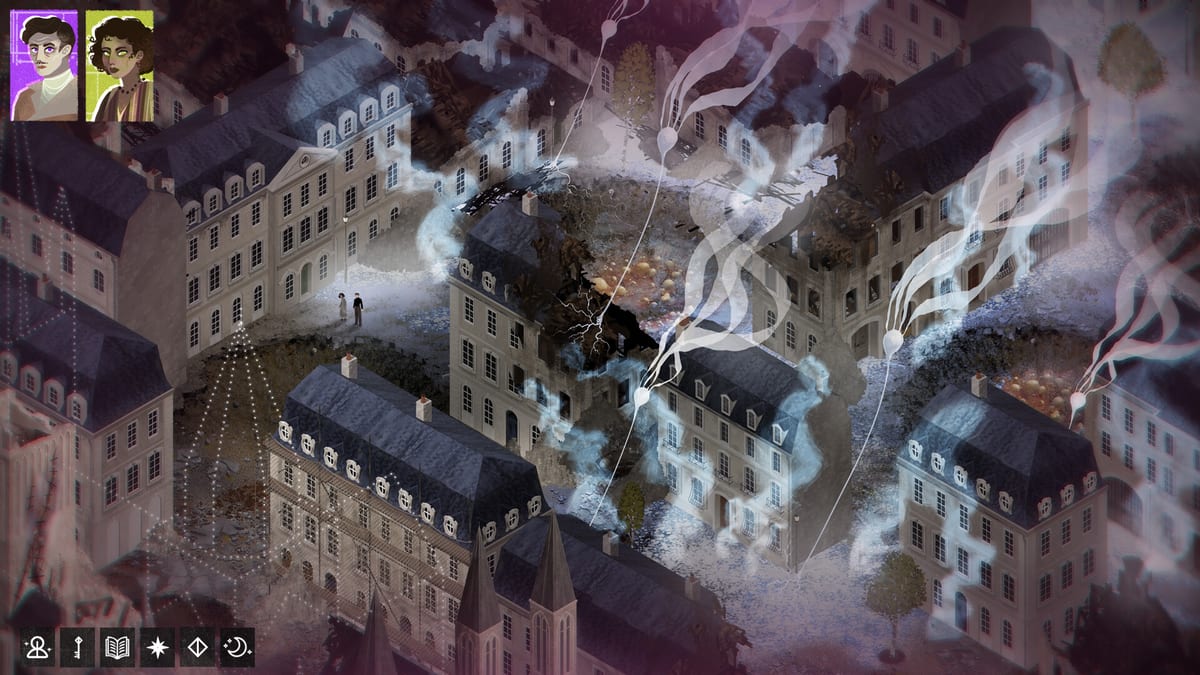
Crafting in Travelling At Night lets Spencer turn occultery into concrete tools. Weather Factory frames venues as places where the skin of the world is thin—you will know them when you see them. The Antibes demo teaches lower-level capabilities you will reuse across the full pilgrimage.
Core rule
You need the correct skill, base item, and location. Failures teach which clause was wrong. Dread can make the skill check beneath a craft harder; Trace can make crafting in public unwise. Companions can aid the roll.
Example outputs
Developer examples include a Midnight Mark to taint dreams and the Rite of the Ascending Sun to manage Dread. Treat these as proof of fantasy range: offensive occult leverage and self-stabilisation both live in the same system. Practical routing: Craft items.
Discovery loop
Explore landmarks from the map locations page—churches, ruined thresholds, sanitarium edges. Talk enough to earn components and permissions. Invest skills that recipes hint at via Skill priority. Expand Footnotes if a Memory redefines what a tool means to Spencer.
Career bias
Exorcist: holy-aspect church work. Conjurer: stranger thin places and Appetite experiments. Physician: functional stabilisers. Writer: interpretive and component-hunting routes through bookish Antibes. Bias is comfort, not exclusion.
UI expectations
Recipe menus received notable polish between early beta and public demo; expect continued improvement. If a menu confuses you, step away, check skill ranks, and retry after an outfit swap. Systems maturity is part of Demo status.
Planning crafts inside builds
Leave Memory budget for craft skills; do not spend everything on Charm. Log target crafts in the Build Planner. On Appetite runs, schedule Dread rites before big experiments. On Compassion runs, still learn one experimental recipe so you are not helpless later.
Full-game trajectory
More stations, higher-level outputs, and regional ingredients will appear as you travel at night to Hush House, colder cities, and beyond. Demo mastery means never being surprised that crafting is central.
Related systems
Outfits for arriving correctly; Footnotes for interpretive growth; Dread & Trace for timing; Manage Dread for why rites exist.
Failure taxonomy
Wrong place, wrong skill, wrong item, Dread-taxed roll, Trace interruption, misunderstood UI. Label the failure before grinding Memories. Players who only grind Charm after a craft fail often misdiagnose. Bring Vincent to the roll if the skill is nearly enough. Swap outfits if the station’s social context hates your kit.
Ethical framing
Midnight Mark fantasies are Appetite candy; Compassion characters can still learn the recipe for literacy without deploying it casually. Footnotes may judge what you craft. Systems are moral theatres in Secret Histories titles—use them consciously.
Integration examples
Craft a Dread rite before a traumatic Footnote cluster. Craft an investigative tool before a Nenah gate. Avoid crafting spectacle tools in front of State-adjacent eyes when Trace is already loud. Bring Vincent when the skill check is the only missing clause. Swap to a kit the station’s social context tolerates. Crafting never exists alone—it sits on the verb map from the Systems hub.
Teaching crafts without spoilers
Tell friends the grammar sentence, point them at church and thin-place scouting, and refuse to paste full recipe trees. Discovery is part of Weather Factory’s joy. This wiki teaches method so you can fail interestingly.
Antibes craft curriculum
Lesson 1: find a station. Lesson 2: fail a craft and label why. Lesson 3: succeed a stabilising rite. Lesson 4: attempt one experimental tool with Trace eyes open. Lesson 5: log skill gates for the next Career. Finish those five and you have completed the demo’s crafting school even if recipe lists remain mysterious. Pair lessons with Craft items for routing and Manage Dread for why stabilisers exist. Full-game stations will feel familiar because the grammar never changes—only the ingredients and stakes.
Frequently Asked Questions
Quick answers drawn from the demo and official notes.
Can I craft anywhere?
No. Stations matter. Thin places are diegetic, not a global menu.
Do I need a guide for every recipe?
No. Learn the grammar; discover recipes in play.
Does crafting spend rare items?
Expect components to matter—scout before you burn unique pieces blindly.
Is crafting combat gear?
No combat gear. Tools change dreams, dread, and narrative leverage.